
Collecting Data

Why is it important?
Collecting data is essential to understanding and protecting our local environment. While information about pest animals and plants remains a key focus, we also collect data on native species and volunteer contributions to build a more complete picture of our impact.


Accurate data on pest animals, pest plants, and control activities helps us to better understand pest species and how they spread, identify priority areas and target our efforts effectively.
Recording native species allows us to track ecological recovery over time. It helps us understand what is returning, where biodiversity is improving, and how our collective efforts are making a difference.
Data on volunteer hours and activities allows us to recognise the vital contributions of our community and helps us understand the scale of effort behind our restoration work.
Reporting pest plants
Reporting the location, status, and control of pest plants is an important part of effective weed management. By sharing accurate information, you help coordinate efforts, avoid duplication, and ensure control work is targeted where it is needed most.

1. EcoNet CAMS weed app
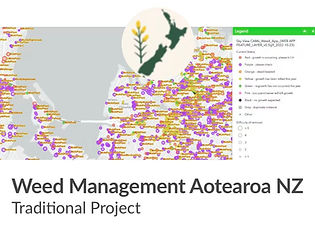
We recommend that you report invasive pest plants and keep control work updated using the EcoNet CAMS app outlined in this document: EcoNet CAMS Weed App
Registering to use the EcoNet CAMS app helps coordinate weed control done by local community groups and also volunteers in groups such as STAMP (Society Totally Against Moth Plant).
2. iNaturalist
For those who are familiar with the iNaturalist app, or would like a simplified way to input to the CAMS Weed App, it is possible to add your weed observations and control to iNaturalist and have it appear as part of the CAMS Weed App data (i.e. create map entries that other users can see).
Click here for instructions on using iNaturalist to record your pest plant activities.
3. Reporting Chinese knotweed infestations
Chinese Knotweed is a Low Incidence Pest Plant (LIPPs) species that PFK is helping our community to control. More details in Low Incidence Pest Plants | Pest Free Kaipatiki
If you have spotted Chinese Knotweed growing in Kaipātiki or elsewhere in Auckland and wish to report it, please fill out the online report form.
Reporting predator control results
Recording predator control activities—such as trapping, baiting, and monitoring—is essential for understanding progress and improving outcomes across Kaipātiki.

For residents trapping at home or reserve volunteers, we recommend:
-
Register with Trap.nz at www.trap.nz/user/register (then look for a confirmation emil).
-
Download the Trap.NZ app and log in using your username and password.
-
Join the PFK project (link opens document in a new window) most appropriate to you and wait to be accepted.
-
Add your trap or bait station/s and start recording catches or bait take as they happen.
For detailed help in getting started with Trap.NZ, visit their help pages at help.trap.nz.
PFK have also produced a Trap.nz guide for the mobile app and a guide for the browser, e.g. from your laptop.
1. Trap.NZ (Recommended)
Our entire local board area has been split into Halos and each has a Trap.NZ project so we can track progress in each part of Kaipātiki.
2. Manual reporting (Alternative option)
If you can’t or don't want to use an app, then use these forms and send in your results:
-
For trapping: PFK Trapping Record Form (v1.3)
-
For baiting: PFK Bait Station Record Form (v1.3)
Send to your coordinator or get in touch with Pest Free Kaipātiki.
Reporting native species
Recording native species sightings helps us understand the health of our ecosystems and track ecological recovery across Kaipātiki. By sharing what you see, hear, or photograph, you contribute valuable data that helps build a clearer picture of biodiversity, informs restoration planning, and supports the protection of vulnerable species.
1. iNaturalist (Recommended)
The primary platform for recording native species observations is iNaturalist. it is easy to record and identify species using photos.
Full details can be found on our Citizen Science page.
2. Species-specific reporting
For certain species, additional reporting pathways are available alongside iNaturalist. These help support targeted monitoring and conservation efforts led by local projects and agencies.
-
Kākā sightings: Share observations with kakawatchnz@gmail.com, including additional details about behaviour and location
-
Bats (pekapeka): Report sightings to us
-
Reptiles: Record sightings and report them to the Auckland Council BioData team by emailing to mary.stewart@aucklandcouncil.govt.nz
Reporting volunteer hours
We would love you to record your and/or your group's volunteer hours and the location of your activities. This data allows Pest Free Kaipātiki to track the work of volunteers in ecological halos, fulfil our reporting requirements, letting Auckland Council know how much effort is going into protecting our native biodiversity, and supports our funding applications to keep PFK running.
Please use our Volunteer Hours Form to report your group or individual volunteer activities. To report volunteer hours anytime and anywhere you want, generate an icon on your phone home page.