
Meet the myrtles blog series

Kia ora and welcome to Meet the myrtles.
Meet the myrtles is a blog series highlighting some of our special native myrtle species.
To find out what PFK are doing to reduce myrtle rust and protect our native myrtles, see our myrtle rust page. If you wish to read all instalments of this series you can find additional posts at the bottom of this page or click here for the list of related posts.
Tuatahi: He aha te Whānau Rātā?
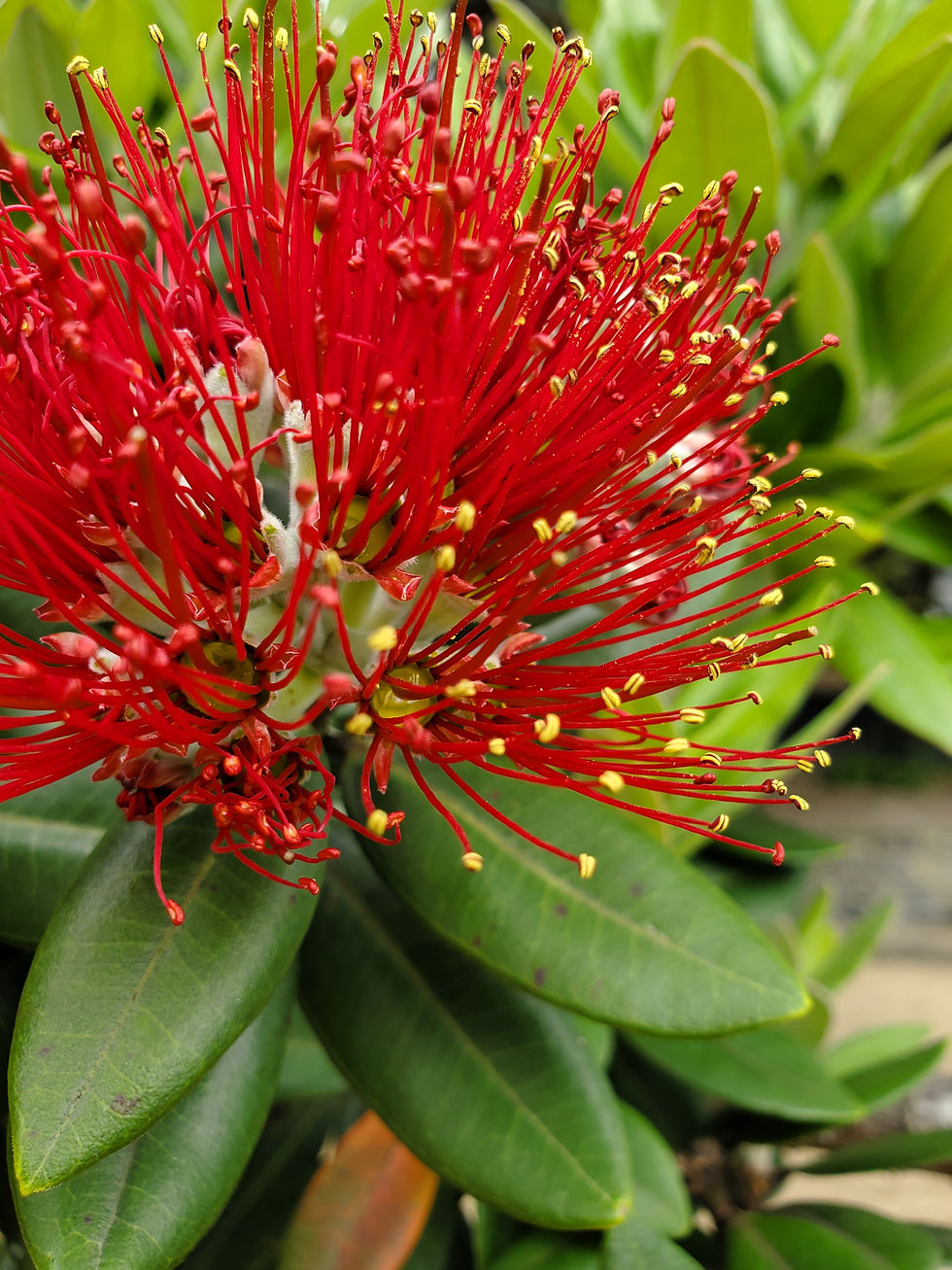
Before we get into the individual species, let’s understand what a myrtle is. Myrtles are plants from the Myrtaceae family (whānau rātā), which is one of the largest families of flowering plants in general, and the third largest of the flowering tree families. Within Myrtaceae, there are 130 genera and of those, six are found in New Zealand. These are Kunzea (kānuka), Leptospermum (mānuka), Lophomyrtus (rāmarāma), Meterosideros (pōhutukawa), Neomyrtus (rōhutu), and Syzgzium (maire tawake). Two of these genera, Lophomyrtus and Neomyrtus can only be found in Aotearoa, adding to the list of our unique endemic species.
In addition to native myrtles, New Zealand now has many non-native myrtles, most coming from across the Tasman, such as bottle brush, eucalyptus and lillypilly. Across the world myrtles are known for their medicinal qualities, and are used as spices (all spice, cloves) and food (feijoa, guava, wax apple).
Most myrtles can be identified by their flowers that have five small petals and many bright and long stamens. Flowers are usually white but can also be red, pink, orange or yellow. Their leaves are more varied across the family, but all plants are woody and have essential oils.
In te Ao Māori several of the myrtle rākau are rākau rangitira. Most well-known in Aotearoa are pōhutukawa that live along the coast, with their flowers being a seasonal tohu within maramataka. They can indicate the beginning of harvest and the specific item to be harvested (often kaimoana, seafood) depending on their location. Pōhutukawa are also known as the starting point of the journey to Hawaiki, the ancestral homeland, where spirits travel back to after death. Myrtle species were used for rongoā Māori, such as rātā sap for tooth ache, cuts and eye troubles, and the bark of several of the rākau for a range of ailments. Other than food and medicine, the wood of myrtle trees were also used for construction, and the trees as mooring for waka.
Tuarua: Myrtle rust

With the myrtle family being so big and widespread across the world, myrtle rust, a fungal disease that affects the myrtle family, has also rapidly spread across the globe. Because myrtle rust has recently arrived in Aotearoa, there is no set te Reo Māori name for it. However, it has been translated as ‘te waikura o te whānau rātā,’ (rust of myrtles, rātā family) for PFK in the past; and ‘heka kahika’ (fungi, rust of Myrtaceae) on the E heke e Heka App.
Myrtle rust is originally from South America, where myrtles like guava grow, however the current ‘pandemic’ strain developed elsewhere. Myrtle rust spreads through microscopic bright yellow spores that spread through the air. It is only active in warm temperatures, where it creates bright yellow pustules on the new growth (leaves, stems and flowers) of myrtles. In some species of myrtles, myrtle rust can cover all new growth, preventing plants from growing and healing. Some species are more susceptible, such as ramarama and maire tawake (swamp maire), while others have natural resistance such as kānuka.
Meeting the myrtles:
PFK's myrtle rust campaign aims to raise awareness on myrtle rust and reduce the impact of myrtle rust on our native species. One way of protecting our native myrtles is this by removing non-native myrtles like lily-pilly hedges, or trimming them in Winter. For more information, see our myrtle rust webpage. Our maire tawake conservation work is another way we are protecting one of our native myrtles. Read all about maire tawake (Sygyzium maire) and their conservation project in our next Meet the myrtles instalment.

Comments