
When Windows Kill: Protecting Our Native Birds from Invisible Threats
Updated: Apr 1

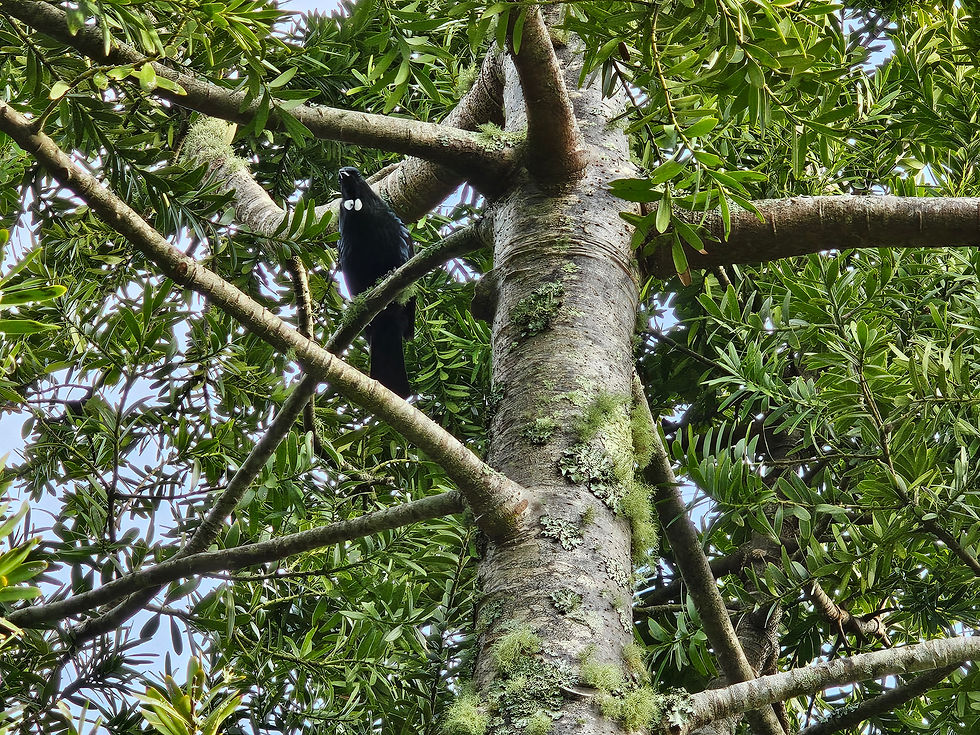
This beautiful long-tailed cuckoo, a strong flier used to long migratory flights, recently met its demise at the hands of an unlikely “predator” — a reflective sheet of window glass right here in the Kaipātiki suburb of Beach Haven.
In fact, such window strikes are not as unlikely as you might think, and they have devastating results—studies have estimated that up to 1 billion birds die from window strikes in the US alone, and newer research from 2024 shows that even when birds survive the initial impact, up to 60–70% of these birds eventually succumb to their injuries, even with expert care. Most victims of window strikes are otherwise strong and healthy birds that would have gone on to live long lives.
The long-tailed cuckoo, or koekoeā (Eudynamys taitensis), is a migratory New Zealand native that arrives in September, breeds here during the summer months of November and December, and migrates back to the tropical Pacific Islands as winter approaches.
Like many other cuckoo species, the long-tailed cuckoo is a brood parasite, laying its eggs (singly) in the host nests of whiteheads or pōpokotea (Mohoua albicilla), brown creepers or pīpipi (Mohoua novaeseelandiae), and yellowheads or mohua (Mohoua ochrocephala). Adult cuckoos lay their eggs in November and December (thereafter leaving child-rearing duties to the ‘foster parents’) and migrate north in February and March. Young cuckoos start their migration journey a little later, in April and May.
The three host birds are seldom seen in urban areas, preferring extensive patches of forest. As a result, long-tailed cuckoos are usually only seen in urban areas when they are on passage to and from breeding locations. This unfortunate individual was likely starting its migration north when it met its untimely demise.
In the eyes of a bird, the reflections of sky and vegetation in our windows are indistinguishable from the real thing and often look like an inviting space to fly into. Such collisions can happen anytime but occur more frequently at dawn and dusk, as well as during spring and autumn migration seasons, making now the right time to make your windows bird-safe!
How to make your windows bird-safe
The good news is that everyone can easily be a part of the solution. While installing bird-safe glass is an option, many less expensive alternatives are available. Adding stickers and objects to the outside of the glass that break up the reflection will help deter birds. Testing has shown that 2 x 4 inches is the most effective spacing (2 inches horizontally, 4 inches vertically), as birds will not fly through spaces smaller than that.
Here are some options for bird-proofing your windows:
Dots and stripes – Marking the outside of your window with adhesives and tape. Make your own or buy ready-made adhesives.
Zen curtains – Vertical cords, strings, or ribbons hanging down over the outside of the window can be aesthetically pleasing. Bird Savers sell ready-made curtains and provide tutorials for DIY versions.
Tempera paint or soap – Get your creative juices flowing and draw your own designs on the outside of your window.
Decals, stickers, sun catchers, etc. – Get creative with your decorations! Create a pattern in the 2 x 4 format (a single decal will not work).
Screens or nets – External shutters, screens, or nets block reflections and birds.
Window films – Decorative films can be an attractive addition to your window. Perforated film creates an opaque surface on the outside while still letting in light and a view from the inside. One-way privacy films allow you to see out while creating an opaque surface on the outside.

Anti Bird-Strike Window Stickers Purchase from Waitākere Ranges Protection Society (waitakereranges.org.nz); Produced by Matuku Link (Te Henga),
What to do if you find a victim of window strike?
Injured birds
If the bird is native, please call the 24-hour DOC emergency hotline 0800 DOC HOT (0800 362 468) or a Wildlife Rehabillitators Network of NZ (WReNNZ) registered wildlife centre for further advice.
If the injured bird is non-native, contact your local vet or nearest bird rescue centre.
Injured birds should be taken to a vet or wildlife centre as quickly as possible.
Dead birds
Report dead native birds to DOC by calling the 24-hour DOC emergency hotline 0800 DOC HOT (0800 362 468). Contact your local university to see if they would like the body for research.
Find out more about window strikes below:


Comments